




Optical Coherence Tomography
Optical Coherence Tomography (OCT) is an advanced imaging technology that uses light waves to produce high-resolution, cross-sectional views of biological tissues. It plays an important role in fields like ophthalmology, dermatology, and cardiovascular research. Edmund Optics supports OCT system development with a wide range of advanced optical components. These include polarization optics for accurate light control, non-polarizing beamsplitters for efficient interferometer design, laser mirrors for precise beam steering, and OCT phantoms for system calibration. Our broadband light sources provide excellent image resolution and depth, while motorized translation stages, active optical components, and galvanometers enable fast, accurate scanning. Together, these technologies drive superior imaging performance and accelerate biomedical research and diagnostics.
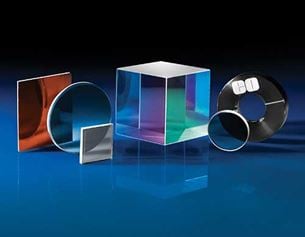
Polarization Optics
Polarization optics control the orientation of light’s electric field, providing powerful capabilities for a variety of applications. By using components such as polarizers and waveplates to manipulate and measure polarization states, these systems can enhance contrast, reduce glare, and reveal information not accessible through intensity or wavelength alone.
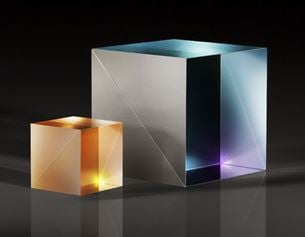
Non-Polarizing Beamsplitters
Non-polarizing beamsplitters divide light in OCT interferometers into reference and sample arms at a defined ratio (e.g., 50:50) and preserve the polarization state. They transmit and reflect both s- and p-polarized light equally, ensuring consistent interference signals and minimizing polarization artifacts. These beamsplitters provide accurate beam recombination and stable detection, supporting precise depth-resolved measurements in OCT.
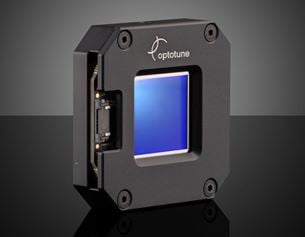
Active Optical Components
Active Optical Components utilize electrically driven mechanisms like tunable focusing and adaptive reflection to control illumination and wavefront behavior, simplifying system design. Edmund Optics offers liquid lenses, variable diffusers, speckle reducers, and adaptive optics, providing fast control over focus and aberration correction.
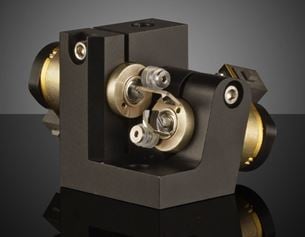
Galvanometers
Steering mirrors and optical scanners enable you to add extra dimensions to your measurements or process samples more efficiently. Samples are often scanned laterally or even axially, creating cross-sections that, when superimposed, provide high-resolution details.
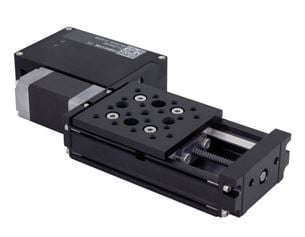
Motorized Stages
Motorized translation stages in optical coherence tomography (OCT) provide precise, programmable motion control essential for both lateral and axial scanning, enabling high-resolution imaging, automated point-by-point acquisition, and volumetric reconstruction. They ensure accuracy, repeatability, and smooth focus adjustments, allow imaging over large areas through mosaic stitching, and facilitate complex scans across curved or irregular surfaces when integrated with robotic and feedback systems. High-precision stages, including stepper-motor or piezo-driven designs, maintain consistent alignment, handle OCT instrumentation, and support dynamic tracking, making them a critical component for OCT’s practical and clinical capabilities.
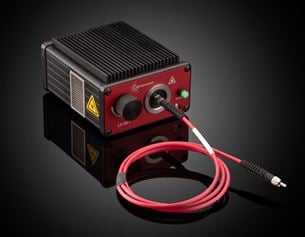
Spectroscopy Lighting
Edmund Optics’ light sources, including superluminescent diodes (SLEDs), swept-source lasers, and broadband sources, are ideal for optical coherence tomography (OCT) because they combine broad spectral bandwidth with short coherence length, enabling high axial resolution and precise tissue imaging; SLEDs provide stable, low-noise output for micrometer-scale resolution, swept lasers allow deep tissue penetration and rapid acquisition for real-time imaging, and broadband sources maximize depth resolution and spectral flexibility; together, these sources enhance signal-to-noise ratio, support noninvasive imaging across varying tissue types, and integrate seamlessly into OCT interferometers to produce detailed 2D and 3D images, making them highly suitable for ophthalmic, cardiovascular, and dermatological applications.
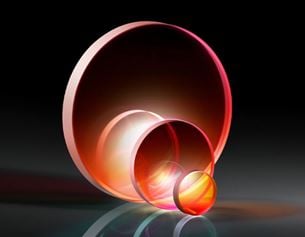
1310nm Laser Line Mirrors
 TECHSPEC® components are designed, specified, or manufactured by Edmund Optics. Learn More
TECHSPEC® 1310nm Laser Line Mirrors are designed with an absolute reflectivity of >99.8% at 1310nm at a 45° angle of incidence. These mirrors are manufactured from high-quality fused silica and are designed for use with high-power laser sources. Available in standard 12.7, 25.4, and 50.8mm sizes, these mirrors can be easily integrated into existing laser systems. Their λ/10 surface flatness and 10-5 surface quality ensure reduced scattering in sensitive laser applications such as optical coherence tomography (OCT).
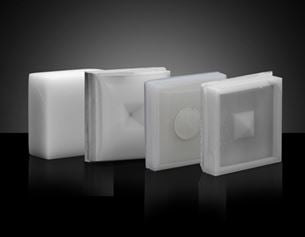
Optical Coherence Tomography (OCT) Phantoms
Optical Coherence Tomography (OCT) Phantoms provide controlled samples for calibrating OCT systems, ensuring accuracy and reliability. These homogeneous phantoms with well-characterized optical properties are available in Point Spread, Multilayer, Pyramid, and Multipurpose designs, offering diverse calibration options. They also enable validation of image-processing algorithms and support quality-assurance protocols to ensure consistent performance in clinical and research settings. OCT Phantoms are ideal for testing 3D spatial depth resolution and image processing software.
or view regional numbers
QUOTE TOOL
enter stock numbers to begin
Copyright 2023, Edmund Optics India Private Limited, #267, Greystone Building, Second Floor, 6th Cross Rd, Binnamangala, Stage 1, Indiranagar, Bengaluru, Karnataka, India 560038
California Consumer Privacy Acts (CCPA): Do Not Sell or Share My Personal Information
California Transparency in Supply Chains Act
This content may include material that has been generated or modified using artificial intelligence (AI).
The FUTURE Depends On Optics®