







Video Transcript
Hi, my name is Tony Karam and I'm the Laser Optics Product Line Manager for UltraFast Optics at Edmund Optics.
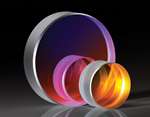
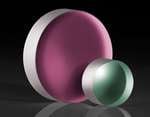
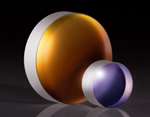
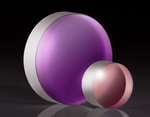
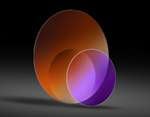
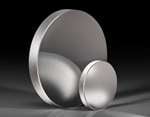
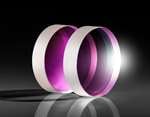
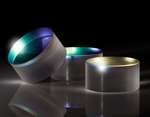
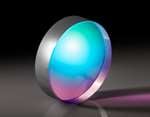
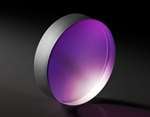
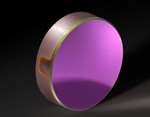
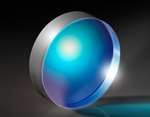
(6.6s) TechSpec ultra-fast highly dispersive mirrors from Edmund Optics feature multiple strong cavities incorporated with an overall chirp multilayer coating, allowing for high performance pulse compression and dispersion compensation within ultra-fast laser applications. Ultra-fast highly dispersive mirrors are a special type of mirrors designed for use with lasers that have pico, femto, or attosecond pulse durations. These types of lasers are also known as ultra-fast lasers. Because of their extreme pulse duration, ultra-fast lasers ablate tissue and other materials more cleanly and with more precision than previously used technologies like nanosecond lasers. As such, ultra-fast lasers are used in medical applications to make procedures like corrective eye surgery safer by reducing the risk of infection and reducing patient recovery time.
Ultra-fast lasers are also used for advanced material processing and to micro-machine small features with higher accuracy and efficiency than other types of lasers. In addition to the biomedical and material processing industries, ultra-fast highly dispersive mirrors are also used in a wide variety of applications such as 3D printing of medical devices, non-layer imaging and spectroscopy. the broad energy bandwidth of ultra short pulses is due to the uncertainty principle. This arises from the inherent wave properties of photons, where the precision of time energy is limited by the Fourier transform, which leads to the temporal dispersion of ultra-fast pulses as they travel in different materials. Hence compression and dispersion compensation are typically needed when working with ultra-fast lasers. Fortunately, Ultra-fast highly dispersive mirrors can correct this dispersion with mirrored coating that feature large negative group delay dispersions and low loss over large bandwidth. Large group delay dispersion is achieved by combining and optimizing the effects of two simpler mirror coating technologies known as CHIRP mirrors and Gyr-Tournois interferometer mirrors. Traditional CHIRP mirrors achieve negative group delay dispersion by using the wavelength-dependent relation to penetration depth.
However, this technology introduces wavelength-dependent GDD oscillations as well, similar to Fabry-Perot resonators, and is only able to achieve limited negative GED. Gyrtonois interferometer mirrors achieve angle-dependent negative group delay dispersion based on resonant cavity structures. However, this technology is only usable for a very narrow bandwidth and introduces third and higher order dispersion. Optimizing these two technologies allow for coatings with larger group delay dispersion values to be achieved, with lower losses and over a broader bandwidth than traditional CHIRP mirrors or GTI mirrors, all without increasing the thickness of multi-layer coatings.
For more information on ultra-fast highly dispersive mirrors and the applications in which they are used, visit edminoptics.com/highly-dispersive-mirrors.


or view regional numbers
QUOTE TOOL
enter stock numbers to begin
Copyright 2023, Edmund Optics India Private Limited, #267, Greystone Building, Second Floor, 6th Cross Rd, Binnamangala, Stage 1, Indiranagar, Bengaluru, Karnataka, India 560038
California Consumer Privacy Acts (CCPA): Do Not Sell or Share My Personal Information
California Transparency in Supply Chains Act
This content may include material that has been generated or modified using artificial intelligence (AI).
The FUTURE Depends On Optics®