




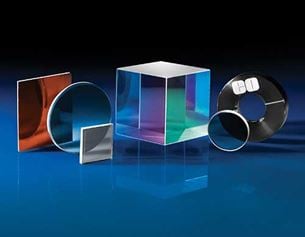
Polarization Optics
Polarizers are optical filters that control the orientation of light’s electric field. In computational imaging and machine vision, they provide a crucial additional degree of freedom beyond intensity and wavelength, enabling enhanced contrast, structured analysis, and extraction of otherwise hidden information.
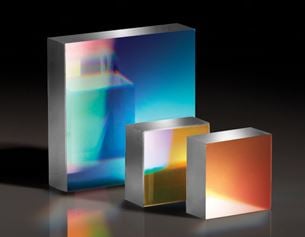
Diffraction Gratings
Diffraction gratings support computational imaging by adding a known, wavelength‑dependent encoding to the light field. Algorithms can later invert this encoding. Their controlled dispersion enables snapshot hyperspectral imaging, lensless and holographic reconstruction, and structured‑illumination super‑resolution. Because gratings produce stable and analytically modelable diffraction patterns, they are ideal for systems that rely on accurate forward models. Such systems recover spectral, phase, or high‑resolution information from a single measurement.
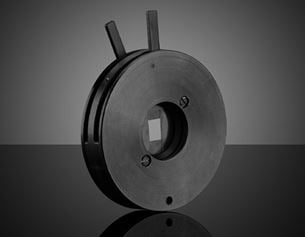
Irises and Apertures
Apertures enhance computational imaging by controlling the light reaching a sensor, thereby improving signal quality and minimizing noise. Researchers can use irises, pinholes, or slits to manage illumination patterns and define constraints for algorithms. Edmund Optics offers adjustable apertures that enable precise control over light throughput and system geometry, enhancing techniques such as coded-aperture imaging and compressive sensing.
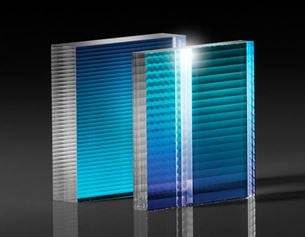
Specialty Lenses
Microlens and multi-lens arrays enhance light-field capture, angular sampling, and point spread functions for depth recovery, refocusing, and snapshot super-resolution. Specialty designs can also increase light collection for low-signal systems, such as hyperspectral cameras. Their engineered optical behavior enables controlled encoding, which supports computational methods to extract richer spatial, spectral, or depth information from limited data.
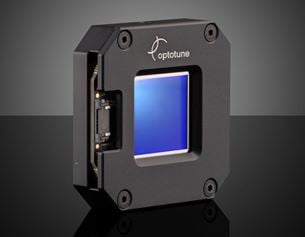
Active Optical Components
Active Optical Components utilize electrically driven mechanisms like tunable focusing and adaptive reflection to control illumination and wavefront behavior, simplifying system design. Edmund Optics offers liquid lenses, variable diffusers, speckle reducers, and adaptive optics, providing fast control over focus and aberration correction. These features enhance computational imaging by enabling richer data capture and real-time wavefront shaping for seamless integration with algorithmic reconstruction.
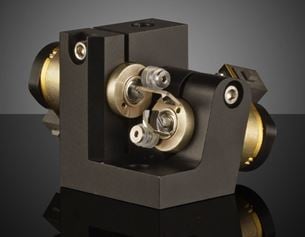
Galvanometers
Steering mirrors and optical scanners enable you to add extra dimensions to your measurements or process samples more efficiently. Samples are often scanned laterally or even axially, creating cross-sections that, when superimposed, provide high-resolution details.
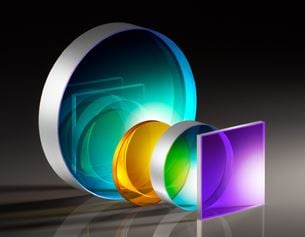
Diffractive Optical Elements (DOE)
Diffractive Optical Elements (DOE) are manufactured to have microstructure patterns that alter and control the phase of transmitted laser light. By altering the microstructure, a diffractive optical element can produce almost any beam intensity profile or beam shape to meet application requirements. These optical elements are manufactured from various substrates, including plastic, fused silica, germanium, sapphire, and zinc selenide (ZnSe), enabling their use with UV, visible, and infrared (IR) lasers. Diffractive Optics are generally designed for a specific laser wavelength, and their performance is wavelength-dependent.
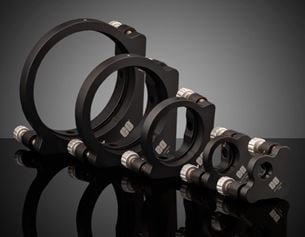
E-Series Kinematic Optical Mounts
Benchtop optical mounts ensure precise positioning for components like lenses, filters, and laser sources. These mounts facilitate easy reconfiguration of encoding elements for hyperspectral setups and other imaging experiments, ensuring consistent optical encodings and reliable system performance.
or view regional numbers
QUOTE TOOL
enter stock numbers to begin
Copyright 2023, Edmund Optics India Private Limited, #267, Greystone Building, Second Floor, 6th Cross Rd, Binnamangala, Stage 1, Indiranagar, Bengaluru, Karnataka, India 560038
California Consumer Privacy Acts (CCPA): Do Not Sell or Share My Personal Information
California Transparency in Supply Chains Act
The FUTURE Depends On Optics®